
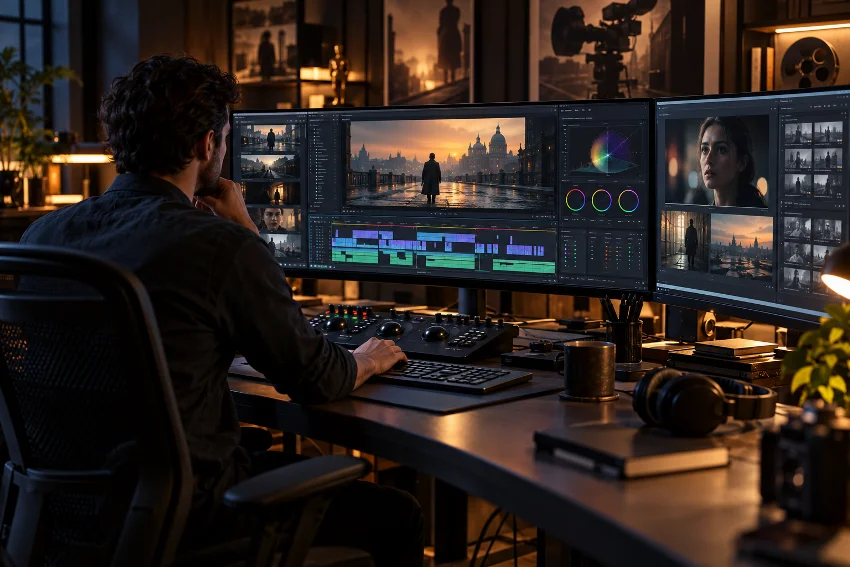
Movie clips are more than entertaining snippets from your favorite films. They offer a fascinating window into the creative decisions that make cinema so memorable. From dramatic camera movements to carefully timed dialogue, even a short sequence can reveal incredible storytelling techniques.
Whether you’re a filmmaker, film student, content creator, or simply someone who loves movies, understanding cinematic scenes can completely change your viewing experience. This guide explores how to examine visual storytelling, editing, sound, and character development while discovering what makes certain film moments unforgettable.
1. Understanding Movie Clips and Their Importance in Cinema
A great cinematic moment doesn’t necessarily require an entire feature-length film to make an impact. Sometimes, thirty seconds of carefully constructed storytelling can communicate more emotion than several pages of dialogue.
Short film sequences capture individual moments that demonstrate how directors, cinematographers, editors, and actors work together to create meaningful experiences.
What Makes a Movie Clip Worth Analyzing?
Not every scene becomes memorable because of spectacular visual effects or dramatic action. Many powerful sequences succeed through subtle creative decisions that audiences barely notice during their first viewing.
A meaningful cinematic excerpt generally contains several interconnected storytelling elements. These include character motivation, visual composition, emotional development, and carefully controlled pacing.
Consider a simple conversation between two characters sitting across a table. The dialogue might appear ordinary, but unusual camera angles, uncomfortable silences, and restrained performances can communicate an underlying conflict.
That hidden layer of meaning is what makes film analysis particularly interesting.
Professional scene analysis examines how technical decisions influence audience interpretation. Instead of simply describing what happens, viewers investigate why certain creative choices produce specific emotional responses.
The Difference Between Watching and Analyzing
Watching a movie usually involves following its narrative, understanding the characters, and enjoying the overall experience.
Analyzing a scene requires a slightly different mindset.
You begin noticing details such as background objects, camera positioning, lighting transitions, and the timing of individual cuts.
For example, a character walking toward an open doorway might symbolize freedom, uncertainty, or personal transformation. The interpretation depends on the surrounding story and how the scene presents that movement.
Film analysis therefore transforms passive entertainment into an active process of observation and interpretation.
2. Cinematography Techniques That Transform Ordinary Scenes
Cinematography is one of the most influential components of visual storytelling. It determines how audiences see characters, environments, and dramatic situations.
Camera placement, lens selection, shot composition, and movement all contribute to the emotional identity of a sequence.
According to StudioBinder’s cinematography guide, effective cinematography supports narrative meaning rather than simply producing attractive images.
Camera Angles and Emotional Perspective
Different camera angles can significantly change how audiences interpret the same character.
A low-angle composition may suggest authority, confidence, or intimidation. Conversely, a high-angle shot can make someone appear vulnerable, isolated, or emotionally overwhelmed.
Eye-level framing often creates a more neutral relationship between the viewer and the subject.
Imagine a confrontation between a powerful executive and a nervous employee. Placing the camera below the executive while looking down toward the employee can emphasize their unequal relationship.
However, these techniques are not universal formulas. Context, performance, and editing ultimately determine what an angle communicates.
Directors frequently reverse audience expectations by presenting seemingly powerful characters from vulnerable perspectives.
Framing, Composition, and Visual Balance
Composition describes how people, objects, and architectural elements are positioned within an image.
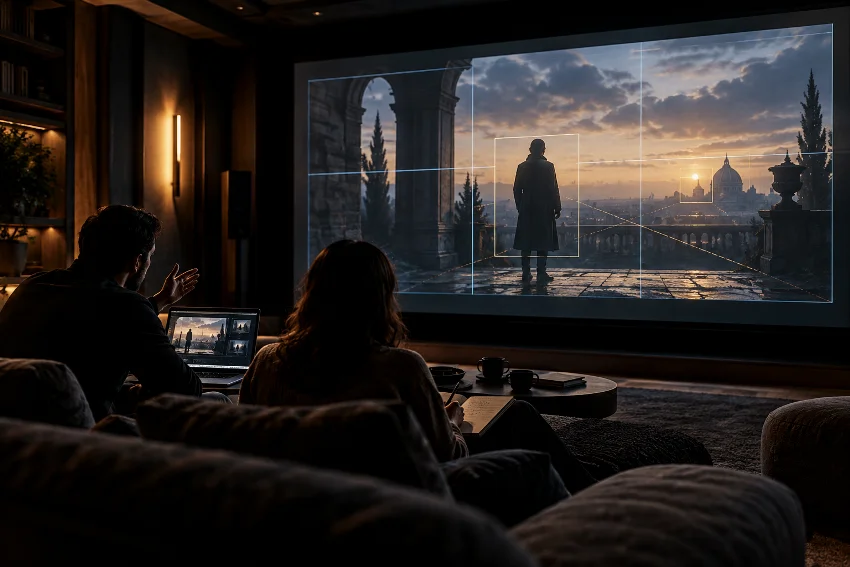
One commonly discussed technique is the rule of thirds, which divides the frame into nine sections using two horizontal and two vertical lines.
Positioning important subjects around these intersections can create visual balance while keeping compositions dynamic.
Symmetrical framing offers a different experience. It may suggest control, perfection, ritual, or an unsettling sense of artificial order.
Director Wes Anderson frequently uses centered compositions to establish highly recognizable visual environments.
Meanwhile, deep-space composition allows important actions to unfold at different distances from the camera. A scene may contain one conversation in the foreground while another character reacts silently in the background.
This layered approach rewards careful observation and repeated viewing.
Camera Movement and Audience Engagement
Camera movement introduces another dimension to cinematic storytelling.
A slow tracking shot can gradually reveal important information, while handheld cinematography may communicate uncertainty or immediacy.
A carefully planned dolly movement can bring audiences emotionally closer to a character without changing the dialogue.
Long takes can be especially effective because they preserve the continuous movement of time and space.
Instead of interrupting the action with multiple cuts, the director allows performances and movement to unfold naturally.
When examining cinematic sequences, consider whether the camera follows a character, observes from a distance, or deliberately restricts the audience’s perspective.
Each approach influences how viewers understand the unfolding events.
3. Film Editing and the Hidden Rhythm of Storytelling
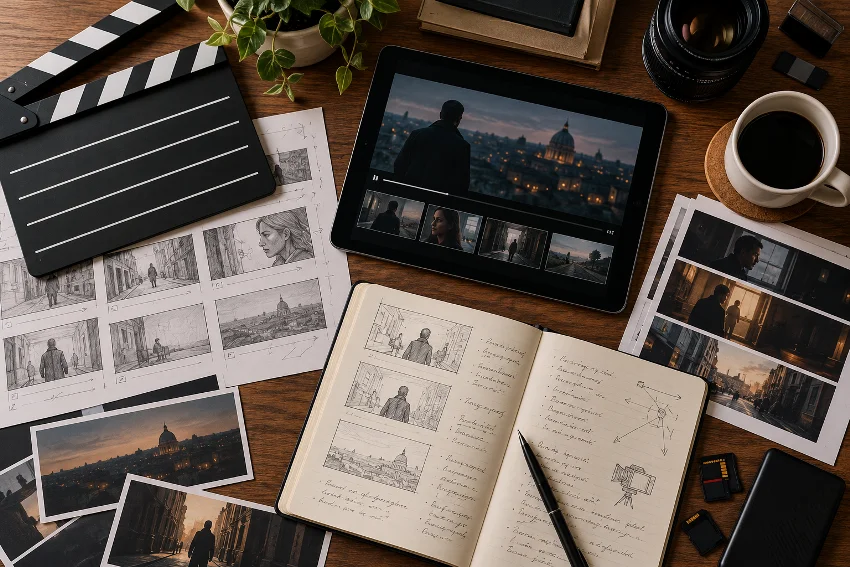
Editing connects individual shots into a meaningful narrative experience.
Although cinematography captures the images, editing determines their sequence, duration, and relationship to one another.
A film editor can transform ordinary footage into suspenseful drama, energetic action, or quiet emotional reflection.
Understanding Cuts, Transitions, and Pacing
A cut instantly changes one image to another. While this sounds simple, its placement can dramatically affect how an audience experiences a scene.
Fast editing often creates urgency by presenting visual information in quick succession.
Slower editing provides additional time to observe performances, environments, and emotional reactions.
For example, an action sequence might alternate rapidly between a moving vehicle, approaching obstacles, and the driver’s increasingly nervous expression.
A romantic scene could instead use longer shots that allow subtle gestures and eye contact to develop.
Neither technique is automatically superior. Effective pacing depends on narrative context and the desired audience response.
Continuity editing helps maintain spatial and temporal clarity across different shots, allowing viewers to understand a sequence without constantly reconsidering where characters are positioned.
The Kuleshov Effect and Creative Meaning
One of cinema’s most fascinating principles is the Kuleshov Effect.
This concept demonstrates how an audience’s interpretation of an image can change depending on the image placed beside it.
Imagine seeing a close-up of someone maintaining a neutral facial expression.
If the next shot reveals a birthday cake, viewers might interpret the expression as anticipation. Replace that image with an empty hospital corridor, and the same face could appear worried or emotionally distant.
The expression itself hasn’t changed. Its perceived meaning comes from the relationship between images.
This principle helps explain why reaction shots are so important.
Editors carefully select when to show a character’s face, what the character appears to be observing, and how long the audience remains with that reaction.
The sequence of images creates an emotional argument that isn’t always directly expressed through dialogue.
Montage and Compressed Storytelling
Montage combines multiple shots to communicate developments that would otherwise require considerable screen time.
Training sequences provide a familiar example.
Instead of watching a character practice for several weeks in real time, viewers see selected moments showing gradual improvement.
A montage might combine repeated exercises, changing weather, physical exhaustion, and eventual success.
Music, visual repetition, and transitions help connect those moments into a coherent progression.
When analyzing montages, pay attention to what the editor chooses to omit.
The missing moments often matter as much as the footage included because editing determines how audiences imagine time passing.
4. Lighting, Color, and Visual Symbolism in Film Scenes
Lighting and color strongly influence the atmosphere of cinematic storytelling.
They communicate emotional information before a character speaks or the narrative reveals important details.
From subtle natural illumination to dramatically colored environments, these visual elements guide audience perception.
How Lighting Creates Mood and Atmosphere
High-key lighting typically uses relatively bright illumination and limited shadow contrast.
It commonly appears in comedies, commercial productions, and scenes intended to feel open or welcoming.
Low-key lighting uses stronger contrast and deeper shadows to create mystery, tension, or visual intensity.
Film noir frequently employs this approach to emphasize morally complicated characters and uncertain environments.
However, lighting should be interpreted within its narrative context.
A brightly illuminated room can become disturbing when the audience knows something dangerous is approaching.
Likewise, a dark interior might feel intimate and comforting when accompanied by warm lighting and relaxed performances.
The relationship between visual design and storytelling matters more than any isolated lighting convention.
Color Psychology and Cinematic Identity
Color palettes help establish a film’s personality.
Warm orange and yellow tones may suggest intimacy, nostalgia, or energy. Cooler blue and green tones can evoke distance, isolation, or technological environments.
These associations are flexible rather than fixed psychological rules.
In Blade Runner 2049, distinctive lighting environments and contrasting color palettes help separate locations while reinforcing the film’s futuristic atmosphere.
The visual contrast between cold urban environments and warmer, dreamlike spaces contributes to the story’s emotional complexity.
When examining a film sequence, notice whether specific colors appear repeatedly around certain characters or situations.
Color repetition may establish thematic connections across otherwise unrelated scenes.
Mise-en-Scène and Environmental Storytelling
Mise-en-scène refers to the arrangement of visual elements within a scene.
This includes costumes, props, sets, actor positioning, and lighting.
A character’s bedroom, for example, can reveal aspects of their personality without requiring explanatory dialogue.
An extremely organized room might suggest discipline or anxiety about control. A cluttered apartment could indicate an overwhelming workload, creative interests, or emotional instability.
These interpretations depend on supporting evidence rather than isolated assumptions.
Set design becomes especially important in cinematic analysis because filmmakers often communicate narrative information through environmental details.
A photograph placed prominently in the background may foreshadow a relationship. An empty chair might emphasize someone’s absence.
Paying attention to these seemingly minor details can reveal additional layers of meaning.
5. Sound Design, Music, and Dialogue in Cinematic Storytelling
Visual storytelling receives considerable attention, but sound is equally important.
Music, dialogue, ambient noise, and silence can reshape the emotional meaning of an otherwise ordinary image.
Sound often provides information that the camera intentionally withholds.
Diegetic and Non-Diegetic Sound
Diegetic sound originates within the fictional world of the film.
Examples include footsteps, conversations, passing vehicles, ringing telephones, and music playing from a character’s radio.
Non-diegetic sound exists outside the characters’ immediate environment.
A dramatic orchestral score accompanying a confrontation is a common example.
Filmmakers frequently combine these audio categories to control audience expectations.
Consider a tense sequence involving someone exploring an abandoned building.
A distant door creak belongs to the character’s environment, while an ominous musical texture may warn viewers that danger is approaching.
Together, the sounds establish suspense even before anything threatening appears.
Why Silence Can Be More Powerful Than Music
Silence can become an effective dramatic technique when filmmakers establish an expectation of sound.
Imagine an intense confrontation accompanied by increasingly loud music.
Suddenly, the soundtrack disappears.
The absence of music may draw attention toward breathing, facial expressions, or a small environmental noise.
This transition can make audiences feel exposed or uncomfortable because the familiar emotional guidance has vanished.
Selective silence also allows dramatic performances to occupy the foreground.
Rather than telling viewers how to feel through musical cues, the filmmaker invites them to interpret the moment independently.
Dialogue Delivery and Subtext
Dialogue analysis involves more than understanding spoken words.
An actor’s rhythm, pauses, facial expressions, and vocal intensity frequently communicate emotions that contradict the literal dialogue.
Someone saying “I’m fine” while avoiding eye contact may suggest precisely the opposite.
This difference between spoken meaning and underlying intention is known as subtext.
Effective dialogue scenes often depend on what characters refuse to acknowledge.
When studying short cinematic sequences, observe whether pauses, interrupted sentences, or unexpected changes in vocal tone reveal emotional conflict.
These subtle performance details can distinguish memorable scenes from ordinary exchanges.
6. Analyzing Iconic Movie Scenes Through Practical Examples
Understanding filmmaking terminology is useful, but applying it to recognizable sequences makes the learning process much more engaging.
Some celebrated films provide particularly clear examples of how visual design, editing, and sound combine to shape audience experiences.
The Opening Sequence of The Dark Knight
Christopher Nolan’s The Dark Knight begins with an elaborate bank robbery that introduces the Joker through coordinated action and gradually increasing tension.
The opening uses character movement, spatial relationships, and controlled reveals to establish the sequence’s dramatic structure.
Rather than immediately explaining the Joker’s motivations, the scene builds anticipation around the mysterious figure orchestrating the crime.
The final reveal becomes more impactful because the audience has already witnessed the consequences of his plan.
This is an excellent example of introducing character through action rather than extensive exposition.
When studying the sequence, observe how information is distributed and how the editing maintains clarity despite multiple participants.
The Restaurant Scene in The Godfather
Francis Ford Coppola’s The Godfather contains a memorable restaurant confrontation involving Michael Corleone, Sollozzo, and Captain McCluskey.
The scene develops tension through restrained performances, deliberate pacing, and the increasing significance of Michael’s decision.
The sound of an elevated train becomes especially prominent as the confrontation approaches its turning point.
The sequence demonstrates how environmental sound and performance can reinforce psychological pressure.
Notice how the dramatic weight comes not simply from what happens, but from the anticipation surrounding Michael’s actions.
The scene is particularly valuable for studying character transformation and suspenseful narrative construction.
Visual Storytelling in Mad Max: Fury Road
George Miller’s Mad Max: Fury Road demonstrates how action cinema can communicate complex movement through carefully organized visual information.
Its sequences frequently prioritize clear focal points and strong directional movement.
The compositions help viewers follow vehicles, characters, and threats within fast-moving situations.
Rapid editing creates intensity, but visual consistency helps prevent the action from becoming incomprehensible.
One useful exercise involves pausing an action sequence at different moments and observing where the primary visual subject appears.
This reveals how framing and editing work together to direct attention.
The film also demonstrates that kinetic storytelling can communicate character relationships without relying heavily on explanatory dialogue.
Emotional Framing in Parasite
Bong Joon-ho’s Parasite offers a compelling example of architecture and spatial arrangement contributing to narrative meaning.
The contrasting living environments of the film’s families help establish differences in social position.
Staircases, windows, and the vertical organization of buildings repeatedly shape how characters move through their surroundings.
These visual patterns reinforce the film’s exploration of inequality and aspiration.
A thoughtful analysis should consider how environmental design interacts with character behavior rather than treating every object as an automatic symbol.
This creates a more convincing interpretation supported by observable details.
7. How to Analyze Movie Clips Like a Professional Film Critic
Learning cinematic terminology is only the beginning. Developing a structured observation method helps turn casual impressions into convincing analysis.
The good news is that you don’t need expensive software or professional filmmaking equipment.
A reliable video player, a notebook, and a willingness to revisit scenes are enough to begin.
Step One: Watch the Scene Without Interruptions
Start by watching the entire sequence naturally.
Avoid pausing immediately to identify camera angles or editing techniques.
Instead, concentrate on the story, character relationships, and your emotional response.
Ask yourself what the scene communicates and which particular moment feels most important.
This initial reaction provides a foundation for deeper observation.
Step Two: Examine the Visual Structure
Watch the sequence again while focusing on cinematography and composition.
Identify changes in shot size, camera placement, movement, and lighting.
Try estimating how long individual shots remain on screen.
A simple three-minute scene may contain numerous camera setups, or it may unfold through only a handful of sustained compositions.
The difference can reveal how filmmakers manage audience attention.
For more detailed analysis, create a basic shot log containing timestamps, shot descriptions, and observations.
Step Three: Listen Without Looking
Audio-focused viewing is an underrated analytical technique.
Play the sequence while concentrating on dialogue, environmental sound, musical changes, and silence.
You may discover subtle sound cues that were almost invisible during the original viewing.
Notice when music enters or disappears and whether certain sounds connect different shots.
This exercise helps separate the soundtrack’s contribution from the images.
Step Four: Connect Techniques to Meaning
The most important analytical question is not simply which filmmaking techniques appear.
It is why those techniques matter.
Instead of writing, “The director uses a close-up,” explain how that close-up affects the audience’s understanding of the character.
For example, a close-up following an uncomfortable conversation might emphasize emotional hesitation.
A stronger interpretation also considers alternative explanations and the surrounding narrative context.
This approach prevents scene analysis from becoming a checklist of technical terminology.
Step Five: Create a Concise Scene Breakdown
Once you’ve identified the relevant elements, organize your findings into a coherent explanation.
Begin with the scene’s narrative purpose, describe important visual and audio techniques, and explain their effects.
A useful analysis can follow a simple pattern: observation, evidence, interpretation, and significance.
For instance, you might argue that a confrontation becomes increasingly claustrophobic because the framing gradually reduces the visible environment.
Support that argument with specific examples rather than relying on general impressions.
Consistent practice will gradually sharpen your analytical instincts and make complex cinematic choices easier to recognize.
Bonus: Sharing Film Excerpts Responsibly
Film commentary sometimes involves including brief excerpts in educational videos, essays, or critical discussions.
However, copyright rules vary by jurisdiction, and publicly available footage is not automatically free to reuse.
In the United States, fair use may apply to certain forms of criticism, commentary, research, and education, depending on factors including purpose, the nature of the work, the amount used, and market impact.
There is no universal number of seconds that automatically makes copyrighted footage permissible.
Creators should use appropriately licensed footage whenever possible, keep excerpts relevant to their commentary, and check applicable copyright laws before publishing.
Responsible sourcing protects creative work while encouraging more thoughtful film discussion.
Movie clips provide an exciting way to explore the creative decisions behind unforgettable cinematic moments. By examining cinematography, editing, lighting, sound design, and performance, viewers can uncover storytelling techniques that often go unnoticed.
Choose a favorite film scene, watch it from a fresh perspective, and practise identifying the details that make its storytelling unique. Every great scene has something worth discovering.
Investment research often benefits from examining multiple sources and market perspectives. This investment directory provides a pathway to additional financial websites, industry information, and educational materials. Explore relevant resources to investigate investment concepts, understand market developments, and complement the financial topics discussed in this article.