
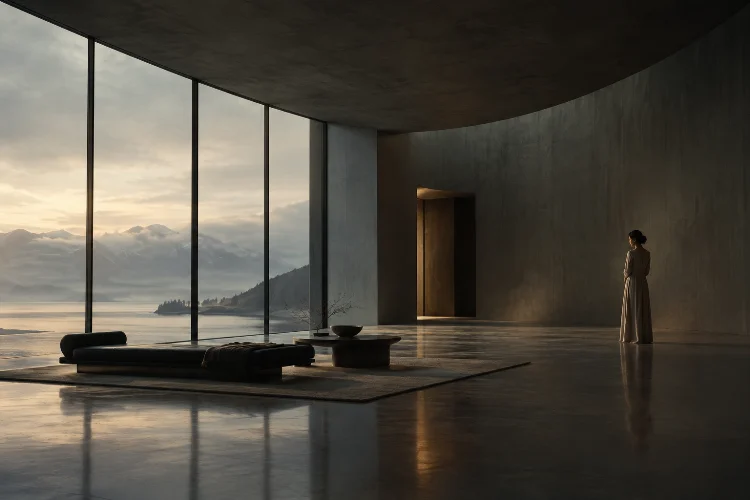
Have you ever watched a movie scene that felt incredibly powerful, even though the characters barely said anything?
Maybe it was an uncomfortable silence between two people, a character standing alone in an enormous room, or a simple camera movement that suddenly made everything feel unsettling.
Here’s the interesting part: those moments usually aren’t accidents.
Modern filmmakers have become remarkably skilled at communicating emotions, hidden motivations, and complicated ideas through visual storytelling. Sometimes, what appears on the screen reveals more than an entire conversation could explain.
That’s where a Movie Scene Breakdown becomes fascinating.
By examining cinematography, lighting, framing, color, and character positioning, we can uncover the visual subtext that makes certain cinematic moments unforgettable.
You don’t need to be a professional filmmaker or film critic to appreciate these techniques, either. Once you understand a few fundamental principles, you’ll begin noticing details that previously slipped past your attention.
In this guide, we’ll explore how modern cinema communicates meaning without explicitly explaining everything, using practical techniques and memorable examples from contemporary films.
What Is Visual Subtext in Modern Cinema?
Visual subtext is the meaning communicated through images rather than directly stated through dialogue.
Think of it as the unspoken conversation happening between the filmmaker and the audience.
A character might insist they’re perfectly happy while sitting alone in a cold, almost empty apartment. Their words communicate confidence, but the surrounding environment suggests isolation.
That contradiction is visual subtext.
The Difference Between Storytelling and Subtext
Every movie operates on several levels.
The surface narrative explains what happens, while the deeper narrative explores what those events actually mean.
For example, imagine two characters having dinner together. On the surface, they’re discussing their ordinary daily routines.
However, one character sits in shadow while the other occupies a brightly illuminated section of the room. A large physical distance separates them, and the camera rarely shows both faces together.
Even without dramatic dialogue, the composition may suggest emotional disconnection.
This is why visual storytelling techniques are essential to cinematic communication. They allow filmmakers to establish relationships, conflicts, and emotional tension without unnecessary exposition.
Why Visual Subtext Matters
Great cinema doesn’t always tell viewers exactly what to think.
Instead, it encourages audiences to interpret expressions, environments, and visual patterns.
Subtext makes storytelling more engaging because viewers participate in discovering its meaning. A relatively simple scene can become emotionally complicated once its visual details are considered.
It’s also important to remember that cinematic meaning isn’t always fixed. Different viewers may interpret the same image differently, especially when cultural experiences or personal memories influence their understanding.
The strongest interpretations connect what appears on screen with the film’s broader narrative.
Understanding Cinematography Through Framing and Composition
One of the easiest ways to begin analyzing a movie scene is by examining how the camera frames its subjects.
Camera composition determines what viewers see, what remains hidden, and where their attention naturally travels.
These choices can influence emotional responses before we consciously understand what’s happening.
Camera Angles and Psychological Power
A low-angle shot places the camera beneath a character, looking upward.
Depending on the context, this perspective can make someone appear dominant, intimidating, heroic, or unusually powerful.
A high-angle shot, meanwhile, looks downward at its subject. It may suggest vulnerability, isolation, or a loss of control.
However, camera angles don’t have universal meanings.
A low-angle shot of a frightened child could emphasize the overwhelming architecture surrounding them rather than suggest personal authority.
Context always matters more than memorizing technical rules.
Negative Space and Emotional Isolation
Negative space refers to relatively empty areas surrounding the main subject.
Filmmakers often use it to create emotional distance or direct attention toward what isn’t present.
Imagine a character standing near the edge of a wide frame, with most of the image occupied by an empty hallway.
That unused space might communicate loneliness, uncertainty, or anticipation.
It can also make viewers feel that something unexpected could enter the frame.
The subconcious tension comes from the relationship between the character and the surrounding emptiness.
Symmetry, Balance, and Unease
Symmetrical compositions can suggest order, control, or artificial perfection.
Directors such as Wes Anderson frequently use balanced framing to create carefully organized cinematic worlds.
But symmetry can also become uncomfortable when the emotional circumstances contradict the apparent visual stability.
A perfectly balanced room containing two characters in conflict might emphasize how controlled their outward behavior remains.
When analyzing cinematography, ask yourself a simple question: Why did the filmmaker choose this particular viewpoint instead of another?
That question can reveal surprising layers of meaning.
How Color, Lighting, and Production Design Reveal Hidden Emotions
Color is one of cinema’s most recognizable storytelling tools.
However, visual symbolism becomes much more interesting when we look beyond familiar assumptions such as red representing danger or blue representing sadness.
Professional filmmakers frequently establish their own visual language within individual stories.
Color Palettes as Emotional Storytelling
A warm color palette featuring oranges, yellows, and soft browns might initially create feelings of comfort.
Yet that same palette could become unsettling if the narrative reveals something threatening beneath an inviting atmosphere.
Likewise, cool colors aren’t automatically negative. Blue lighting might suggest tranquility in one scene and emotional detachment in another.
The important detail is how a film uses color consistently, changes it, or introduces unexpected contrasts.
A color appearing repeatedly around one character may eventually become associated with that character’s emotional journey.
When it disappears or changes, the visual shift can communicate narrative development without dialogue.
Lighting and the Psychology of Shadows
Lighting determines how much visual information audiences receive.
High-key lighting generally creates an evenly illuminated image with relatively soft shadows. Low-key lighting uses stronger contrast and darker areas.
Neither style automatically communicates a particular emotion.
Instead, filmmakers manipulate brightness, contrast, and shadow placement to reinforce what characters experience.
A face partly hidden in darkness might suggest secrecy or uncertainty. Alternatively, it could simply reflect a character moving through a naturally dim environment.
The interpretation becomes stronger when surrounding scenes establish a meaningful visual pattern.
Production Design as Character Development
Production design includes the physical enviroment of a movie, from furniture and architecture to decorative objects and background details.
These elements can reveal personality without requiring characters to explain themselves.
A meticulously organized bedroom might suggest someone’s desire for control. A cluttered workspace could communicate emotional pressure, creative energy, or financial limitations.
Consider how differently a character feels when placed inside a luxurious modern mansion versus a cramped basement apartment.
The surroundings don’t merely establish location. They can communicate social status, personal aspirations, and power relationships.
Mise-en-Scène: Reading Body Language, Props, and Physical Space
The filmmaking term mise-en-scène describes the arrangement of elements visible within a shot.
It includes costumes, scenery, props, lighting, and actor positioning.
Understanding mise-en-scène helps viewers recognize how seemingly ordinary visual decisions contribute to a movie’s deeper themes.
Blocking Reveals Relationships
Blocking describes where actors stand, sit, and move during a scene.
Imagine two characters beginning a conversation while standing close together.
As the discussion becomes uncomfortable, one walks toward a distant window while the other remains seated.
No dramatic camera effect is necessary. Their changing positions already communicate growing emotional distance.
Blocking can also establish authority.
A character controlling the center of a room may dominate the scene, while another remains confined near a doorway.
These spatial relationships often communicate tension more efficiently than dialogue.
Objects Can Become Visual Metaphors
Film props sometimes carry meanings beyond their practical purpose.
A broken photograph might represent a damaged relationship. A locked door could suggest exclusion, secrecy, or emotional repression.
But symbolism works best when supported by narrative context.
Not every mirror represents identity, and not every staircase symbolizes social mobility.
Instead of searching for hidden meanings in every object, observe whether particular details receive repeated attention.
If the camera returns to an object at important emotional moments, there’s a stronger reason to investigate its significance.
Movie Scene Breakdown Examples From Four Modern Films
The best way to understand visual subtext is to examine how established filmmakers use it.
Let’s explore four contemporary movies that communicate complex ideas through cinematic choices.
Note: The following examples contain thematic and visual spoilers.
Parasite (2019): Architecture as a Symbol of Class Division
Bong Joon-ho’s Parasite provides one of the clearest examples of visual storytelling through architecture.
The film contrasts the cramped semi-basement apartment occupied by the Kim family with the spacious modern residence belonging to the wealthy Park family.
The difference extends far beyond interior decoration.
<text inline={true} strong={true}>The positioning of the buildings reflects the characters’ social circumstances.</text>
The Kim family lives partly below street level, while the Park family occupies a luxurious property associated with elevation, privacy, and comfort.
Staircases become especially important throughout the narrative.
Characters repeatedly move upward and downward between spaces, creating a physical representation of economic inequality.
During the rainstorm sequence, the Kims descend through the city toward their flooded neighborhood.
Their journey transforms a seemingly ordinary movement through urban space into a powerful expression of social hierarchy.
Meanwhile, the Park family’s experience of the same rain becomes comparatively pleasant.
The brilliance lies in how the film connects physical geography with unequal lived experiences.
Get Out (2017): Comfortable Images Hiding Psychological Horror
Jordan Peele’s Get Out demonstrates how filmmakers can use visual contrast to manipulate expectations.
When Chris arrives at the Armitage family estate, the surroundings initially appear welcoming.
Warm natural light and attractive interiors create an atmosphere that seems reassuring.
However, the audience gradually recognizes the disturbing intentions hidden beneath that appearance.
Cinematographer Toby Oliver has discussed how the production delibrately used inviting lighting to establish a false sense of safety.
One particularly memorable sequence involves the Sunken Place.
Chris appears suspended within an enormous dark void, watching the outside world through a distant visual opening.
The imagery turns psychological captivity into a physical experience.
His apparent separation from reality represents the terrifying loss of personal agency.
Rather than explaining this concept through lengthy dialogue, the film makes viewers experience the character’s helplessness through composition, scale, and visual perspective.
Past Lives (2023): Emotional Distance Through Physical Separation
Celine Song’s Past Lives explores memory, identity, longing, and relationships shaped by time.
Unlike movies that rely on dramatic declarations, much of its emotional storytelling comes from subtle gestures and carefully constructed visual spaces.
Cinematographer Shabier Kirchner has explained that the film’s visual approach uses architecture, movement, composition, and changing light to communicate internal experiences.
Consider the sequences where Nora and Hae Sung reconnect across geographical distances.
Screens and separate domestic spaces emphasize both their emotional connection and their physical separation.
Later, their reunion in New York creates an entirely different relationship between bodies and surroundings.
A particularly powerful moment occurs near the ending, when the characters wait together without filling the silence with explanations.
The restrained composition allows hesitation and unspoken feelings to occupy the scene.
Rather than defining exactly what their relationship should become, the film gives emotional complexity room to exist.
The Zone of Interest (2023): The Horror Outside the Frame
Jonathan Glazer’s The Zone of Interest takes visual subtext in a disturbing direction.
The film depicts the domestic life of Auschwitz commandant Rudolf Höss and his family, who live next to the concentration camp.
Many scenes show an apparently ordinary household, with carefully maintained gardens and everyday family activities.
Yet the sounds beyond the garden wall reveal the atrocities occurring nearby.
This contrast is essential to the film’s meaning.
The comfortable domestic imagery exists alongside horrifying auditory evidence, creating a deeply unsettling separation between what characters acknowledge and what audiences understand.
Sound designer Johnnie Burn worked extensively on constructing this off-screen world.
The result demonstrates that visual storytelling isn’t limited to what the camera reveals.
Sometimes, what the frame excludes becomes the most important part of the scene.
How Editing, Pacing, and Sound Create Cinematic Subtext
Visual meaning doesn’t exist only within individual shots.
It also emerges through the relationships between successive images, the duration of a scene, and the sounds accompanying what appears on screen.
Editing Changes How We Interpret Images
Imagine seeing a close-up of someone looking toward something outside the frame.
If the next shot reveals a birthday cake, viewers might interpret the expression as anticipation or affection.
Replace the cake with an abandoned hospital bed, and that same expression could take on a completely different emotional meaning.
This illustrates an important principle of film editing: surrounding images influence how audiences interpret a shot.
The association is often discussed through the Kuleshov effect, a foundational concept in cinematic montage.
Filmmakers can also use match cuts, parallel editing, and visual repetition to establish connections between otherwise separate events.
The Emotional Power of Pacing
Fast editing frequently creates urgency, while longer shots give viewers more time to examine behavior and space.
However, slow pacing doesn’t necessarily mean calmness.
A prolonged shot showing a character approaching a dark doorway can become more suspenseful precisely because the camera refuses to cut away.
The waiting itself becomes uncomfortable.
Sound Can Contradict the Image
Sound design adds another layer to visual interpretation.
A cheerful song playing over disturbing imagery might generate irony, while an unexpected silence can make an ordinary moment feel threatening.
Pay attention to what characters hear, what only the audience hears, and which sounds seem suspiciously absent.
Those distinctions can reveal information that the visuals alone might not communicate.
How to Analyze a Movie Scene Like a Film Critic
Learning cinematic analysis doesn’t require expensive equipment or formal academic training.
You mainly need patience, curiosity, and a willingness to watch familiar scenes differently.
Start With Observation, Not Interpretation
Choose a scene lasting approximately two to five minutes.
Watch it once without pausing and write down your immediate emotional response.
Did the sequence feel tense, intimate, uncomfortable, exciting, or peaceful?
Then watch it again, focusing on framing, lighting, character movement, and significant objects.
Try separating what you can directly observe from what you believe those details suggest.
For example, “the character stands alone at the edge of the frame” is an observation. “The composition suggests isolation” is an interpretation.
That distinction makes your analysis more convincing.
Examine the Scene Without Sound
Mute the audio and watch the sequence again.
Notice whether the relationships between characters remain understandable through their movements, gestures, and positions.
Look for meaningful changes in distance, framing, or lighting.
This exercise can make small visual details surprisingly noticable.
Next, listen to the sequence without watching the screen.
You’ll often discover how much information comes from music, dialogue delivery, ambient noise, and silence.
Connect Visual Details to the Larger Story
A useful scene breakdown should explain more than individual camera techniques.
It should connect those choices to character development, emotional conflict, and the movie’s central themes.
Suppose a filmmaker repeatedly isolates a character within symmetrical compositions.
You might interpret those images as signs of emotional restriction, but check how the character behaves elsewhere.
Does the visual pattern change when the character gains independence?
Does the framing become less controlled during moments of freedom?
These comparisons provide stronger evidence than analyzing one isolated image.
Finally, avoid assuming every creative decision has one secret meaning.
Sometimes a visual choice serves practical storytelling, and sometimes it allows multiple interpretations.
Good analysis explores possibilities while remaining grounded in what the film actually shows.
Understanding visual subtext changes the way we experience modern cinema.
A simple conversation can reveal emotional distance through framing, while a carefully designed location can communicate complex social inequalities without direct explanation.
Through cinematography, color, lighting, production design, editing, and sound, filmmakers create meaning that extends beyond spoken dialogue.
Movies such as Parasite, Get Out, Past Lives, and The Zone of Interest demonstrate how powerful these techniques can become when used thoughtfully.
The best part? You don’t need professional filmmaking knowledge to start recognizing them.
Next time you watch a memorable movie, revisit one scene and examine its visual decisions. Pay attention to the details you previously overlooked, explore how they connect to the wider story, and challenge yourself to explain why the scene works.
You might discover that the most important part of a movie is what nobody says.
