
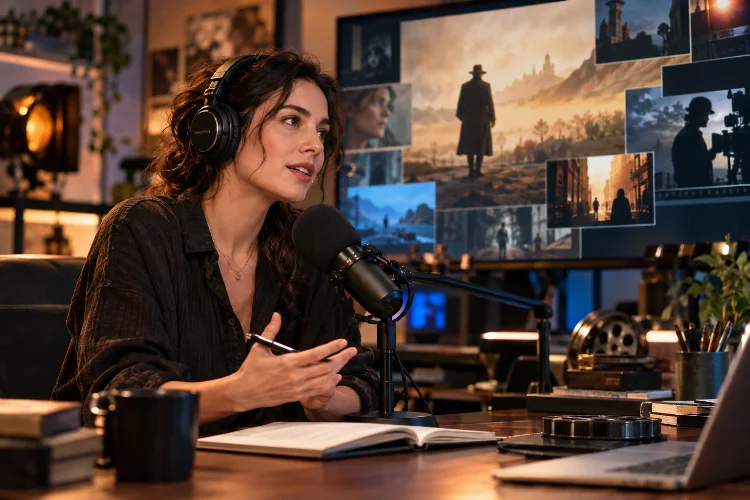
Have you ever watched a short movie clip online and felt like something important was missing?
Maybe the acting was incredible, the cinematography looked amazing, or the dialogue sounded meaningful. Yet without understanding what happened before the scene, who the characters were, or why the moment mattered, its emotional impact felt incomplete.
That’s where editorial context makes a huge difference.
A carefully selected movie clip can entertain audiences for a few seconds. But when that same clip includes thoughtful explanations, filmmaking insights, historical background, or character analysis, it becomes something much more valuable.
Instead of simply watching a scene, audiences begin understanding the creative decisions and storytelling techniques that make it memorable.
This is exactly how editorial context enhances the value of curated movie clips in modern film journalism, cinematic commentary, educational platforms, and digital publishing.
For content creators, adding meaningful context isn’t just about explaining what’s happening on screen. It’s about helping viewers discover details they might otherwise overlook.
Let’s explore how thoughtful movie clip curation transforms ordinary footage into engaging, informative, and memorable cinematic experiences.
1. Understanding the Relationship Between Movie Clips and Editorial Context
Movie clips are everywhere.
You can find memorable dialogue exchanges, dramatic confrontations, emotional performances, and spectacular action sequences across video-sharing platforms, entertainment websites, and social media.
However, simply collecting impressive moments doesn’t automatically create meaningful content.
The real value emerges when those moments are selected, organized, and explained with a clear editorial purpose.
What Exactly Is Editorial Context?
Editorial context refers to the additional information, interpretation, and perspective surrounding a piece of media.
In cinematic content, this might include background information about a film, explanations of character motivations, commentary on directorial decisions, or observations about cinematography and editing.
Imagine watching a scene from The Godfather without knowing anything about Michael Corleone.
You might appreciate the performances and atmosphere, but you probably wouldn’t understand the full significance of his transformation.
Now imagine reading a brief explanation about Michael’s initial reluctance to participate in the family business and how a particular confrontation changes his direction.
Suddenly, the scene carries greater emotional and narrative weight.
The footage hasn’t changed.
Your understanding has.
Why Context Creates More Than Entertainment
Entertainment captures attention, but interpretation can turn attention into understanding.
The British Film Institute’s discussion of video essays describes how filmmakers and critics use selected footage to develop ideas about cinematic style, genre, and authorship.
A collection of movie moments can therefore become a form of visual criticism rather than a simple compilation.
For example, an editor might assemble several scenes demonstrating how different directors portray loneliness.
Without explanation, the result might resemble an atmospheric montage.
With thoughtful commentary, it becomes an exploration of how framing, distance, lighting, and performance communicate emotional isolation.
That difference is what makes editorial curation particularly valuable.
2. Narrative Context Helps Audiences Understand Why a Scene Matters
One of the biggest challenges with standalone movie clips is that they often separate important moments from their original stories.
A confrontation might look intense, but viewers unfamiliar with the characters may not understand what’s at stake.
A heartbreaking farewell could appear ordinary without knowing the relationship behind it.
Narrative context helps restore those missing connections.
Establishing Character Motivation and Emotional Stakes
Consider the famous baptism sequence in Francis Ford Coppola’s The Godfather (1972).
The scene alternates between a religious ceremony and acts of violence connected to Michael Corleone’s consolidation of power.
Viewed without background knowledge, the contrast may seem dramatic but confusing.
However, explaining Michael’s development throughout the film allows audiences to recognize the sequence’s deeper meaning.
The editing presents a contradiction between public morality and private criminal authority.
The sequence becomes more than an example of parallel editing.
It becomes a visual expression of character transformation.
This is why strong commentary should explain what a character wants, what prevents them from achieving it, and how the selected moment changes their situation.
Explaining Without Spoiling Everything
Adding context doesn’t mean summarizing an entire movie before showing a clip.
In fact, excessive explanation can weaken the viewing experience.
A better approach is to provide only the information necessary to understand the scene.
For example, rather than describing every event leading to a confrontation, explain that two characters have developed a relationship built on distrust.
Then allow the performances and cinematography to communicate the remaining tension.
The objective is to make viewers feel informed without taking away their opportunity to interpret the material.
When audiences recieve just enough background information, they can appreciate the scene while remaining curious about the larger story.
Connecting Individual Moments to Larger Themes
Narrative context becomes especially useful when a scene represents a recurring idea.
A brief exchange about money might reflect a film’s broader exploration of economic inequality.
A character looking through a window could reinforce themes of isolation, surveillance, or emotional distance.
These relationships may not be obvious when the moment appears alone.
Editorial commentary helps viewers recognize how individual details contribute to the entire cinematic experience.
3. Cinematography and Editing Analysis Reveal Hidden Creative Decisions
Many moviegoers recognize when a scene feels powerful without knowing exactly why.
Perhaps the camera moves unusually slowly, the lighting creates discomfort, or the editing rhythm changes unexpectedly.
These decisions influence viewers emotionally, sometimes without attracting conscious attention.
Thoughtful analysis can reveal how those filmmaking choices work.
Psycho: Understanding the Power of Film Editing
Alfred Hitchcock’s Psycho (1960) features one of the most extensively discussed sequences in cinema history.
The shower scene creates an overwhelming impression of violence through rapid editing, carefully arranged images, sound, and suggestion.
However, the sequence’s impact becomes more interesting when audiences examine how little explicit violence is actually shown.
The documentary 78/52, discussed in The Criterion Collection’s interview with Alexandre O. Philippe, examines Hitchcock’s technical construction alongside the cultural circumstances surrounding the film’s release.
This provides a perfect example of editorial context in action.
A standalone clip might frighten or surprise viewers.
A detailed breakdown helps them understand how editing, camera placement, and audience expectations create that experience.
Explain the Technique, Then Explain Its Purpose
A common mistake in cinematic commentary is identifying techniques without explaining their narrative function.
Saying that a director uses close-ups isn’t particularly informative.
A stronger analysis explains why those close-ups matter.
Perhaps the framing restricts the audience’s perspective, making a character appear trapped.
Maybe the editor holds on someone’s expression to reveal uncertainty before an important decision.
Good commentary connects technical observations with emotional results.
Viewers shouldn’t simply learn the names of filmmaking techniques.
They should understand how those techniques influence the story.
Helping Viewers Notice Visual Patterns
Directors frequently repeat visual ideas throughout their films.
Symmetrical compositions, recurring colors, unusual camera movement, or specific framing choices can contribute to a recognizable artistic style.
A carefully curated selection of scenes makes these patterns easier to identify.
For example, filmmaker kogonada’s video essay Wes Anderson // Centered uses clips from several films to demonstrate the director’s preference for centered compositions.
As discussed in the BFI’s examination of video essays, this approach transforms repeated visual examples into an argument about directorial style.
The patterns may have influenced viewers subconciously during their original viewing.
With editorial explanation, those visual relationships become clearer and more meaningful.
4. Historical and Cultural Background Adds Another Layer of Meaning
Movies don’t exist in isolation.
They reflect the social attitudes, technological possibilities, artistic traditions, and cultural conversations surrounding their creation.
Understanding those circumstances can change how audiences interpret particular scenes.
That’s why historical context is such an important part of thoughtful film curation.
How Historical Knowledge Changes Our Interpretation
Consider watching a groundbreaking cinematic sequence decades after its original release.
Modern viewers may find the technique familiar because later filmmakers have used similar approaches.
Without historical background, it’s easy to overlook what made the original work influential.
Hitchcock’s Psycho provides a useful example.
Today, viewers are accustomed to psychological thrillers featuring abrupt narrative developments and disturbing imagery.
But the film’s storytelling decisions challenged many expectations of mainstream American cinema in 1960.
Explaining that background allows audiences to understand why the movie attracted attention and how its influence developed.
Historical information transforms a familiar scene into evidence of cinematic change.
Parasite: Understanding Social Commentary Through Visual Design
Bong Joon-ho’s Parasite (2019) illustrates how cultural context can deepen scene analysis.
The film explores economic inequality through relationships between families occupying dramatically different social positions.
Physical space becomes a major part of that storytelling.
The wealthy Park family’s elevated home contrasts with the Kim family’s semi-basement apartment.
Staircases and vertical movement repeatedly reinforce these differences.
The Criterion Collection’s discussion of Parasite highlights how the film organizes class divisions through physical elevation.
When individual clips are presented with this context, viewers can recognize how architecture contributes to the film’s social commentary.
A scene featuring characters climbing or descending stairs becomes more meaningful than simple movement between locations.
Respecting Different Cultural Interpretations
Not every audience interprets visual symbolism or character behavior in the same way.
Cultural experiences influence how viewers understand relationships, social expectations, humor, and moral decisions.
Effective editorial commentary should acknowledge those differences when they’re relevant.
Instead of presenting every interpretation as an unquestionable fact, explain the evidence supporting your reading.
This creates space for thoughtful disagreement.
It also makes film analysis more inclusive and intellectually engaging.
5. Thematic Curation Turns Separate Clips Into a Connected Story
There’s an important difference between collecting scenes and curating them.
A collection brings material together.
Curation establishes meaningful relationships between the selected pieces.
That relationship can become the foundation of an entirely new viewing experience.
Build Collections Around Clear Editorial Themes
Imagine creating a video titled “Five Unforgettable Movie Conversations.”
The concept sounds entertaining, but it’s fairly broad.
Now consider a more focused title such as “How Directors Create Tension Through Silent Reactions.”
This second approach introduces a specific analytical question.
Each selected scene becomes evidence supporting an exploration of cinematic tension.
You might compare a threatening conversation, an uncomfortable family dinner, and an emotionally difficult confession.
Although the films may belong to different genres, the scenes share a storytelling technique.
This gives the collection coherence.
Side-by-Side Comparisons Create Original Insights
Comparative film analysis is particularly effective because it encourages viewers to identify similarities and differences.
For example, you could compare how two directors use long takes to create anxiety.
One scene might depend on physical movement through a complicated environment.
Another might remain almost completely stationary while emphasizing an uncomfortable conversation.
Viewed seperately, both scenes offer interesting examples of cinematography.
Presented together with commentary, they reveal different solutions to the same storytelling problem.
The curator contributes value by identifying the relationship and explaining its significance.
Create an Editorial Journey
The order of selected clips also matters.
A well-structured presentation might begin with a simple, easily recognizable example before moving toward more complicated techniques.
Each new scene can introduce another dimension of the central argument.
For instance, a breakdown of cinematic isolation could begin with a character framed alone inside a room.
The next example might explore emotional isolation within a crowded environment.
A final scene could demonstrate how editing and sound reinforce a character’s sense of disconnection.
This progression creates a narrative within the commentary itself.
The viewer isn’t simply consuming unrelated footage.
They’re following a developing idea.
6. Thoughtful Editorial Presentation Improves Engagement and Discoverability
Even excellent cinematic analysis can struggle when its presentation is confusing.
Digital audiences need clear explanations, accessible formatting, and an understandable reason to keep watching or reading.
Editorial packaging connects valuable insights with the people most likely to appreciate them.
Titles and Introductions Should Promise Specific Value
Compare two potential video titles.
“Best Movie Scenes Ever” offers entertainment but doesn’t establish a distinctive purpose.
“How Movie Directors Create Suspense Without Dialogue” communicates a clearer educational benefit.
The second title tells viewers what they’ll learn.
That specificity also helps content creators target relevant search intent.
People searching for cinematography analysis, filmmaking techniques, or movie scene breakdowns are more likely to find content that directly addresses those interests useful.
Google’s guidance on creating helpful, reliable, people-first content emphasizes original analysis, useful information, and satisfying the audience’s needs.
This doesn’t guarantee higher rankings, but it provides a valuable foundation for SEO-friendly editorial content.
Captions, Timestamps, and Descriptions Make Clips More Useful
Useful context isn’t limited to long paragraphs or voice-over narration.
Small presentation details can significantly improve the viewing experience.
For example, captions make spoken explanations and dialogue easier to follow, particularly when viewers watch without sound.
Timestamps help audiences navigate longer discussions.
Accurate film titles, release years, and relevant credits establish useful reference points.
A clear description can also explain why the selected scene matters and what viewers should examine.
These elements are especially important when presenting clips from unfamiliar films.
They reduce confusion while encouraging deeper engagement.
Provide Value Before and After the Clip
An effective editorial structure often contains three stages.
First, introduce a question that makes viewers curious.
Next, present the scene or relevant visual evidence.
Finally, explain how specific filmmaking decisions answer the original question.
Imagine analyzing a suspenseful hallway sequence.
Before the clip, ask why an empty corridor feels threatening.
Afterward, explain how negative space, restricted visibility, and carefully timed sound effects influence audience expectations.
This structure creates a clear connection between observation and interpretation.
It’s also suitable for written articles that use still images, scene descriptions, or legally usable excerpts instead of embedded footage.
7. Responsible Curation Builds Credibility and Long-Term Editorial Value
Adding insightful commentary is important, but responsible presentation matters just as much.
Movie clips are generally protected by copyright, and their use can raise legal and ethical questions.
Publishers also need to consider accuracy, attribution, and the distinction between interpretation and established fact.
These factors influence whether an editorial project earns audience trust.
Understand Copyright and Fair Use Limitations
In the United States, fair use may allow certain uses of copyrighted material for criticism, commentary, scholarship, teaching, or research.
However, it isn’t an automatic exemption.
The U.S. Copyright Office explains that fair use depends on factors including the purpose of the use, the nature of the copyrighted work, the amount used, and potential market effects.
There’s no universally safe number of seconds that creators can reproduce without permission.
Providing attribution or adding commentary doesn’t automatically establish fair use.
Copyright laws also differ between countries, so creators should evaluate the rules applicable to their intended use.
When appropriate, obtaining permission or using licensed material offers greater certainty.
Original Commentary Matters for Video Platforms
YouTube’s monetization policies distinguish between reused material with significant original value and compilations that offer little meaningful transformation.
Its reused content guidelines identify critical reviews and substantive commentary as examples of potentially eligible content.
However, eligibility under monetization policies is separate from copyright compliance.
A video may satisfy one policy while still facing copyright claims.
This distinction is definately worth understanding before building a business around curated movie footage.
The strongest editorial strategy prioritizes genuinely original analysis rather than assuming that trimming clips or adding basic captions makes them original works.
Build a Consistent Research and Publishing Workflow
A professional curation process begins by identifying a clear editorial question.
Once the topic is established, review potential scenes and select those that directly support the intended argument.
Record relevant information such as the movie title, release year, director, scene description, and any reliable supporting sources.
Next, separate factual claims from personal interpretation.
If a filmmaker has explicitly discussed a creative decision in an interview, cite that source.
If you’re proposing your own reading of a scene, make the interpretive nature of the claim clear.
Before publishing, confirm that names, credits, and contextual details are accurate.
Review the clarity of the commentary, the accessibility of the presentation, and the legal basis for using any copyrighted footage.
Finally, evaluate the finished content based on whether audiences gain useful insight.
A simple editorial question can help guide that evaluation: does the commentary reveal something meaningful that the footage alone wouldn’t communicate?
If the answer is yes, the curation has a clear purpose.
Curated movie clips become significantly more valuable when they’re supported by thoughtful editorial context.
Narrative explanations help audiences understand character motivations, while cinematography analysis reveals the creative decisions behind memorable scenes.
Historical background, cultural interpretation, and thematic comparisons add further depth, transforming individual movie moments into opportunities for learning and discovery.
Equally important, clear presentation, credible sourcing, and responsible copyright practices help establish long-term audience trust.
The goal isn’t simply to collect recognizable footage.
It’s to create an experience that offers fresh perspectives and deeper appreciation for cinematic storytelling.
Next time you select a movie scene for an article, video essay, or film commentary project, think beyond what happens on screen.
Explain why the moment matters, reveal the filmmaking choices behind it, and give your audience a new reason to appreciate the art of cinema.
